
How healthcare costs work: Understanding premiums, deductibles, copays, and coinsurance
Last updated: 7/22/2026
Understanding healthcare costs can be overwhelming, especially when it’s unclear what you pay versus what your insurer covers.
Oftentimes, costs can seem unpredictable. However, learning how each cost fits into your plan can help you better manage spending and make more informed choices about care and medications.
Health insurance can offer helpful financial protection when you need care, from unexpected illnesses to routine services like check-ups, counseling, immunizations, and screenings. Knowing your benefits can make it easier to track and control your healthcare costs.
Key points
- Learning how health insurance works helps you predict and manage healthcare expenses.
- A health insurance plan outlines what services are covered, how much your insurer pays, and if you are required to use in-network providers.
- The core elements of a health plan are premiums, deductibles, coinsurance, and copays.
How does health insurance work?
A health insurance plan outlines what services your insurer will cover, and how much they will pay, usually over the course of a year. Many people may get coverage through an employer. Others purchase an individual market plan or qualify for government programs such as Medicare and Medicaid.
However, plans do not typically cover every doctor. Some plans may require you to receive care from providers, hospitals and pharmacies in their network that offer negotiated rates, known as “in-network” providers.
Care from providers outside of your plan’s network is called “out-of-network.” In some cases, services from “out-of-network” providers are covered but at a lower rate by your insurance, so you’ll have to pay more out of pocket.
What do I pay for in a health insurance plan?
Although health insurance plans help you pay for covered health care services and items, there are a few expenses that you are responsible for.
What is a premium in health insurance?
A premium is the regular fee you pay to stay enrolled in your insurance plan. If you have insurance through an employer, this often comes out of your paycheck, and your employer pays a percentage of it. The premium is required to be paid whether you use services or not, and can be billed bi-weekly, monthly, quarterly, or yearly based on your plan.
What is a deductible in health insurance?
You may have to pay for many covered services until you meet your deductible. However, some services may be covered before the deductible applies, depending on the plan. For example, if your deductible is $1,500, you may need to pay for most covered services until you reach $1,500.
Choosing the amount of your deductible often means balancing what you pay now versus later. Plans with higher deductibles usually have lower monthly premiums, which can save money if you do not need much care – but you will pay more out of pocket when you do use services. Plans with lower deductibles typically have higher premiums, but they can reduce what you pay when you need care.
What counts toward my deductible in health insurance?
Most services must be covered by your plan and medically necessary to count toward your deductible. However, some services, such as preventive visits, may waive the deductible and are covered in full by your insurer. Certain plans may also differentiate deductibles by network, leading to separate deductibles for out-of-network and in-network services.
The expenses that count toward your deductible are highly specific to your plan and benefits. To learn more about your deductible, please refer to your plan materials, Explanation of Benefits (EOB), or the Capital Blue Cross member portal.
What is coinsurance?
Once you have met your deductible amount, your insurer will begin to cover a percentage of your healthcare costs, also known as cost sharing. One form of cost sharing is coinsurance, which is when your insurer pays for a percentage of a service and you pay the remainder. For example, your plan may have 10% coinsurance for x-rays. This means your plan pays 90% of the allowed amount and you pay the remaining 10% coinsurance. This expense is typically billed after the insurance claims have been processed.
What is a copay?
A copay is another form of cost sharing. This is the fixed amount you pay at the time you receive a covered health care service. Some plans may require you to meet the deductible prior to the copay cost share taking effect. For example, you may be required to pay a $20 copay per visit to your primary care provider, while your insurer pays the rest of the bill later.
What is an out-of-pocket maximum?
There are some limits on how much you are required to pay for health services. An out-of-pocket maximum is the most you pay during a plan year for covered in-network services that count toward that limit. This includes deductible, copayments, and coinsurance for in-network medical services.
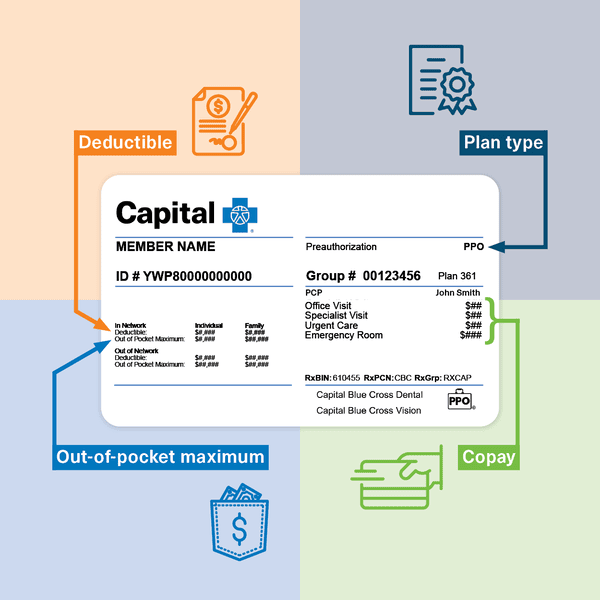
Capital Blue Cross members may be able to find their copay, deductible, and out-of-pocket maximum on their ID card.
What are the different types of health insurance plans?
Health insurance plans vary in how they balance costs and flexibility. Some lower-cost plans limit which doctors and hospitals you can use, while others offer more choice of provider at a higher price. Knowing these trade-offs can help you pick a plan that fits your needs and budget.
- A Health Maintenance Organization (HMO) is a type of health plan that typically limits coverage to care from providers who work for or contract with the HMO. This plan may require you to live or work in its specified service area to be eligible for coverage. Members choose an in-network primary care provider to coordinate their care. There is typically no out-of-network coverage on an HMO plan other than emergency services.
- An Exclusive Provider Organization (EPO) is a type of health plan that covers health services only if you use doctors, specialists, or hospitals within the plan’s network, except in an emergency. There is typically no out-of-network coverage on an EPO other than for emergency services.
- A Preferred Provider Organization (PPO) is a type of health plan that creates a network of participating providers by contracting with hospitals and doctors. You will pay less when you use the providers within this network. While HMO and EPO health plans may not cover out-of-network services, a PPO plan may provide some coverage for out-of-network services. However, PPO plans will generally offer more coverage at a lower cost to members when using in-network providers.
How Capital can help you
If you are a member and have questions about navigating your health plan with Capital Blue Cross, call Member Services using the number on the back of your Member ID card. You can also walk in or schedule an appointment at one of our Capital Blue Cross Connect Health and Wellness Centers.
FAQs
What is balance billing in healthcare?
An out-of-network provider may give you a balance bill. Your insurance may cover part of the costs, but the out-of-network provider can bill you for the balance – the difference between what they charge and what your plan pays.
You may also receive a “surprise bill.” This is an unexpected charge for care you thought was in-network, but it turns out some or all services were provided by an out-of-network provider or facility. In some situations, federal or state law may protect you from being billed more than the in-network cost-sharing amount for certain out-of-network services under the No Surprises Act.
What is an Explanation of Benefits (EOB)?
After you receive health care services, your Explanation of Benefits (EOB) shows how your claim was processed and what you may owe. This document provides a summary of charges from your provider and which of those services are covered by your insurer.
Copay vs. Coinsurance: What’s the difference?
A copay is the fixed fee that you pay for a covered service, while coinsurance is the percentage of the cost you pay for a service after meeting your deductible.
This is not medical advice and is not intended to be a substitute for professional medical advice, diagnosis, or treatment. Always seek the advice of your physician or other qualified health care provider with any questions you may have regarding a medical condition or treatment. The information provided is meant for a general audience. Capital Blue Cross and its affiliated companies believe this health education resource provides useful information but does not assume any liability associated with its use.